

Coffee Roast
To determine the greenhouse gas emissions caused by the greenes² Coffee Roast, a comprehensive process was conducted to examine each step of its life cycle. Laboratory analysis determined that the greenes² Coffee Roast is an "organic" product from organic farming. The attributable emissions of the greenes² Coffee Roast until December 2022 were offset through a climate protection project in Brazil.
Observation period from 12/2021 to 12/2022
PRODUCT DESCRIPTION

The greenes² Coffee Roast with the PCF identifier 21113 under the specific preparation conditions in the Mannheim Student Union cafeteria. It is a blend of 40% India Monsooned Malabar Arabica, 30% Ethiopia Sidamo Riff Valey, and 30% Brazil Monte Belo.
ACCOUNTING LIMITS

The Product Carbon Footprint takes into account the entire life cycle of the product from Raw material extraction, production and product use up to Disposal, as well as all Packaging and transport within this chain.
FUNCTIONAL UNIT

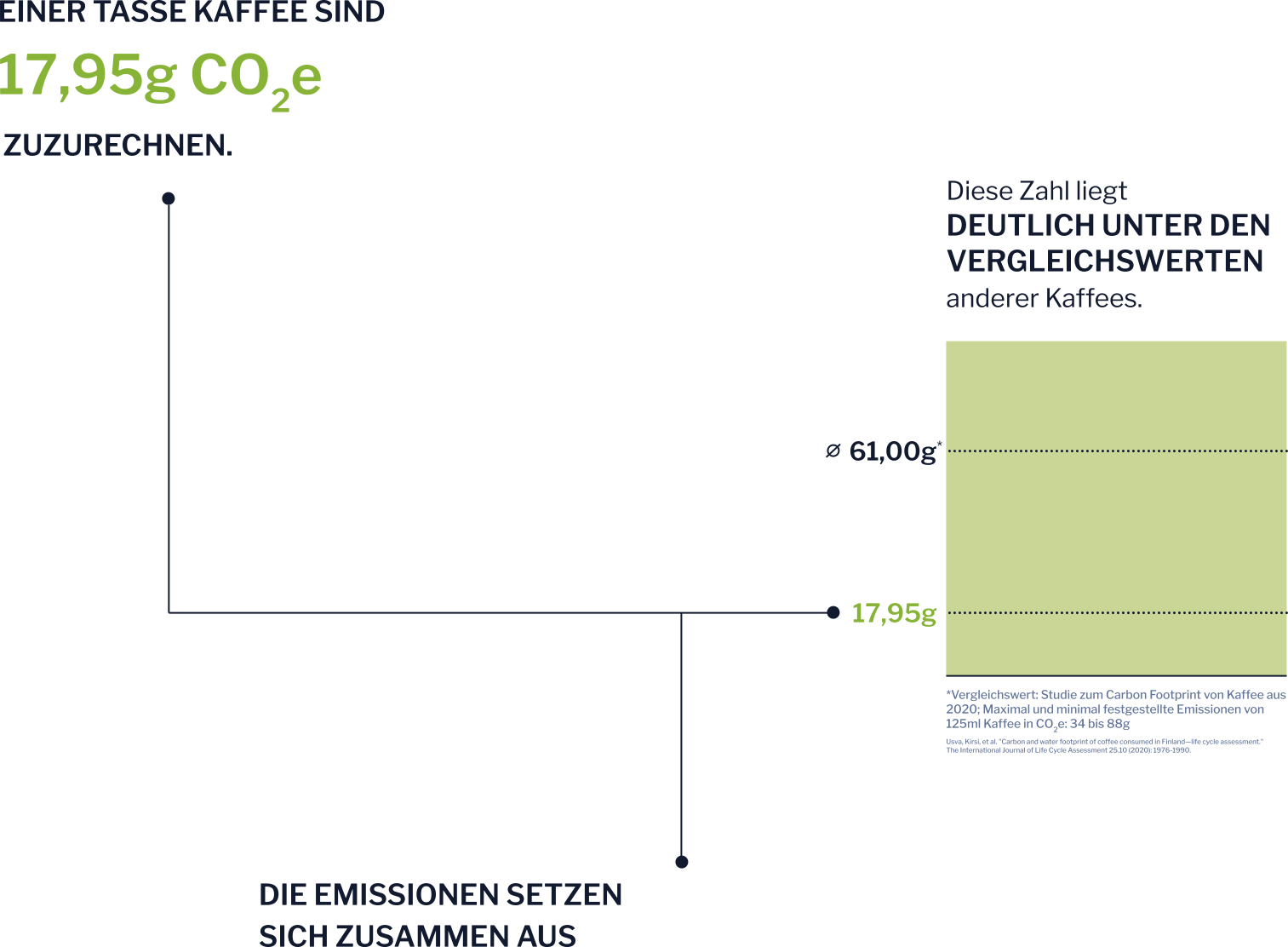
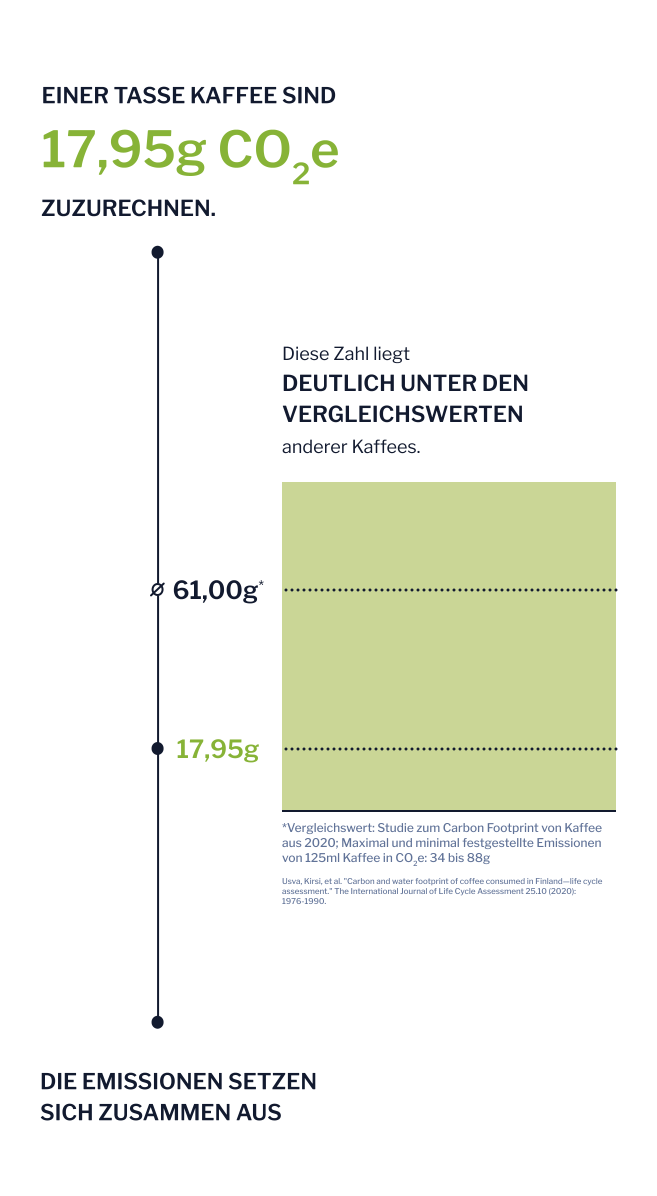
The unit of comparison for the quantified benefit of the product system was a cup of 125ml coffee, prepared from 7g of greenes² coffee roast, was chosen. This is used as a representative reference value.

RAW MATERIAL EXTRACTION
Over 60% of the greenhouse gas emissions from the greenes² Coffee Roast are generated during raw material extraction. Almost half of this is due to fertilization. Laboratory analysis It was determined that greenes² Coffee Roast is a product from organic farming, which can therefore be declared "organic." Only organic fertilizers were used for fertilization, and no mineral fertilizers, which would cause approximately six times the emissions. This has already significantly reduced the largest product-specific emissions hotspot.
DISPOSAL
Coffee grounds were considered for disposal. Wastewater and packaging were directly allocated to the respective production step.
PRODUCTION
The production step examined the roasting of the beans by the coffee roaster at the Lauri roastery in Mannheim. The energy for the roasting process is provided by natural gas.
DISTRIBUTION
During distribution, transport and packaging were considered. The majority of the transport from the countries of origin (India, Ethiopia, and Brazil) is by ship. This mode of transport produces significantly fewer emissions than air transport. From Hamburg, the beans are transported to Mannheim by truck. A reusable bucket system is used to transport the roasted beans from the roastery to the cafeteria, reducing emissions from packaging.
PRODUCT USE
When examining product usage, coffee preparation was examined under the specific conditions of the Mannheim Student Union cafeteria. Because electricity from renewable energy generation is used, only a fraction of the energy-related emissions are generated compared to a conventional electricity mix. When preparing coffee at home using a conventional electricity mix instead of green electricity, these emissions can be up to 100 times higher and thus represent the largest portion of the product's emissions. Consequently, the coffee maker can significantly influence the amount of emissions from a cup of coffee through their choice of energy source. Furthermore, disposable cups are avoided when serving coffee in the cafeteria, and instead only cups with a long service life are used. This reduced emissions from the provision of containers by a factor of 10.
CONCLUSION
Thanks to the avoidance of mineral fertilizers in coffee cultivation, the use of electricity from renewable energy generation in preparation and the elimination of disposable cups in the cafeteria, the product-specific emission hotspots could be optimized.
Offsetting der Produktemissionen
Um auch für die übrigen optimierten Emissionen Verantwortung zu übernehmen, wurden diese durch UN-zertifizierte Kompensationen ausgeglichen. Hierfür wurde ein sorgfältig geprüftes Projekt in Brasilien ausgewählt und unterstützt. Dieses stellt durch ein Wasserkraftwerk emissionsarme erneuerbare Energie bereit, welche fossile Brennstoffe ersetzt.