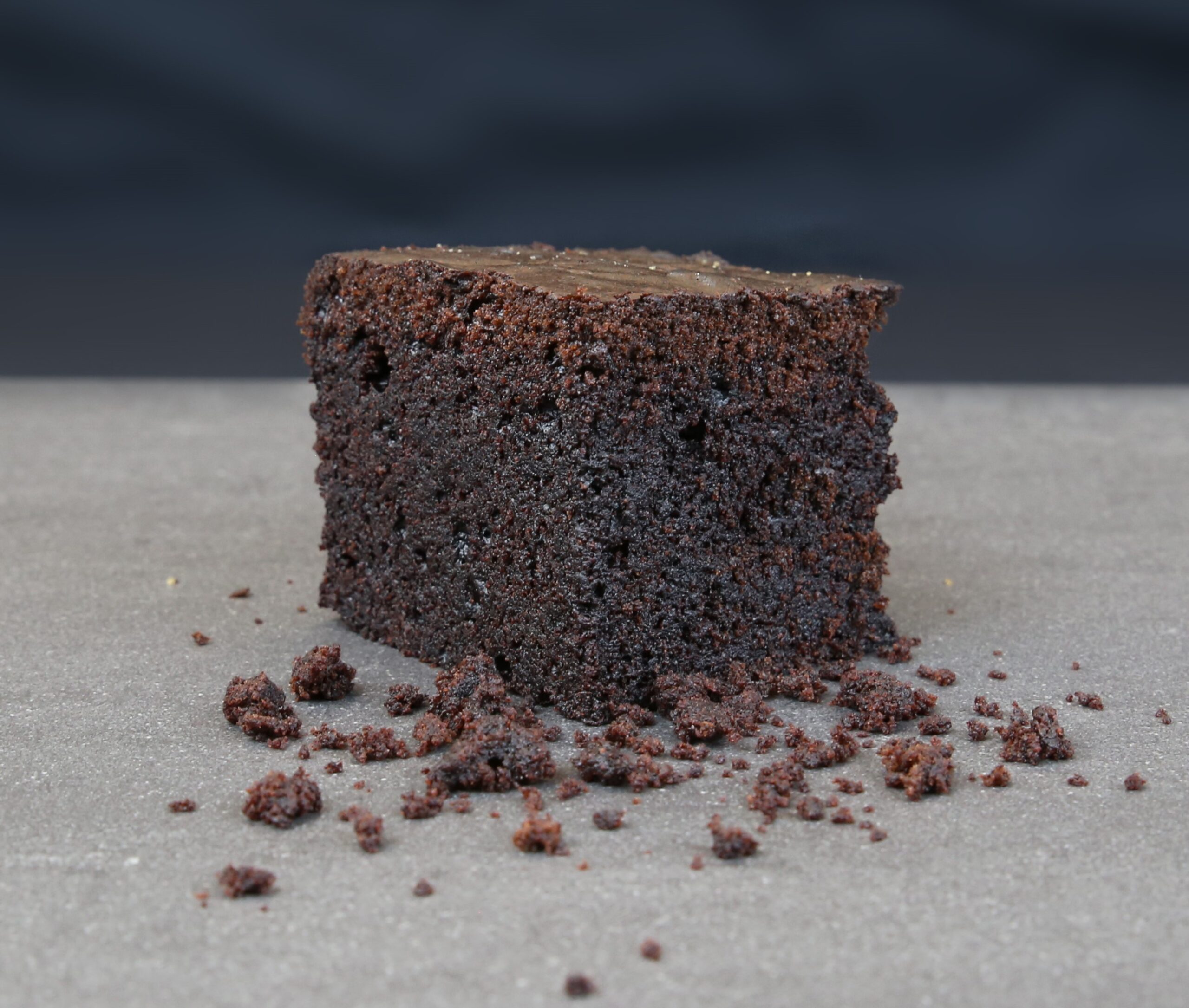
Vegan brownie

In order to record the greenhouse gas emissions caused by the vegan greenes² brownie, the individual steps in its life cycle were considered in a comprehensive process. The attributable emissions of the vegan greenes² Brownie were offset by a climate protection project in the Philippines by 10/2023.
Period under review from 10/2022 to 10/2023
PRODUCT DESCRIPTION

The vegan brownie from greenes² with the PCF code 22093, which consists of the following ingredients: Flour, cocoa, sugar, coffee, baking soda, rapeseed oil and oat milk.
ACCOUNTING LIMITS

The Product Carbon Footprint takes into account the entire life cycle of the product from Raw material extraction, production and product use up to Disposal, as well as all Packaging and transport within this chain.
FUNCTIONAL UNIT

The unit of comparison for the quantified benefit of the product system was a greenes² brownie with a weight of 134 g is selected. This is used as a representative reference value.

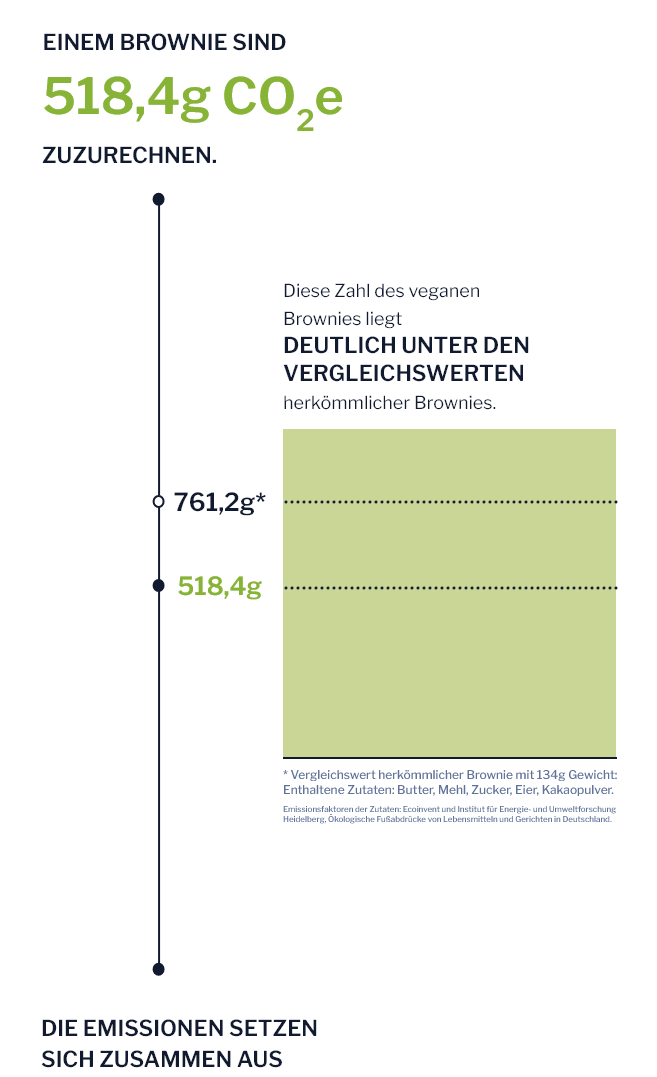

allocation of emissions to the
life cycle phases by ingredient
Raw material extraction

production

distribution

Disposal

RAW MATERIAL EXTRACTION
The associated greenhouse gas emissions were analyzed individually for each ingredient in the greenes² brownies. The emissions generated are attributable to the ingredient-specific cultivation, harvesting and fertilization conditions, as well as mechanical work processes. Thanks to the avoidance of animal products, the product-specific emission hotspots were minimized. For example, the use of an organic oat drink instead of cow's milk saved around 7 times the emissions.
DISPOSAL
The individual product packaging and the coffee grounds from the coffee contained in the greenes² brownie were considered for disposal.
PRODUCTION
In the production step, the ingredient-specific processing and manufacturing stages were considered.
DISTRIBUTION
In terms of distribution, the transportation of the finished and packaged ingredients from the individual production sites to Mannheim was considered. Emissions were reduced by primarily using products manufactured in Germany.
PRODUCT USE
The preparation of the greenes² brownies under the specific conditions of the canteen of the Studierendenwerk Mannheim was considered during product use. The processes included comprise the preparation of the dough in the mixer and the baking of the brownies. The energy for baking is provided by natural gas. Green electricity is used to power the mixer.
CONCLUSION
Thanks to the avoidance of animal products, the use of green electricity for preparation and the considerable use of regional ingredients, the product-specific emission hotspots have been reduced.
Climate-neutral product
To ensure accountability for the remaining optimized emissions, these were offset through UN-certified offsets. A carefully reviewed project in the Philippines was selected and supported for this purpose. The Burgos Wind Project enables the supply of renewable energy that could not be provided, operated, and maintained without the offset funds. The technical implementation of this offset project was achieved through the construction and maintenance of 50 wind turbines, each with a nominal output of 3 MW. Participation in the project brings a host of other benefits, in addition to global savings in greenhouse gas equivalent emissions. These include the involvement of local governments and communities to raise awareness of environmental protection, the creation of numerous new jobs, and the associated technology and knowledge transfer for the generation of energy from renewable sources.
By recording and offsetting the responsible greenhouse gas emissions of the product over its entire life cycle, the vegan greenes² Brownie of the Studierendenwerk Mannheim may be called "climate neutral" for the validity period 01.10.2022 - 01.10.2023. The contribution to saving greenhouse gas equivalent emissions for the product is 2 t CO2e. The acquired certificates are assigned via the reference VC24730/2022 with the numbers 3489083 to 3489084.